
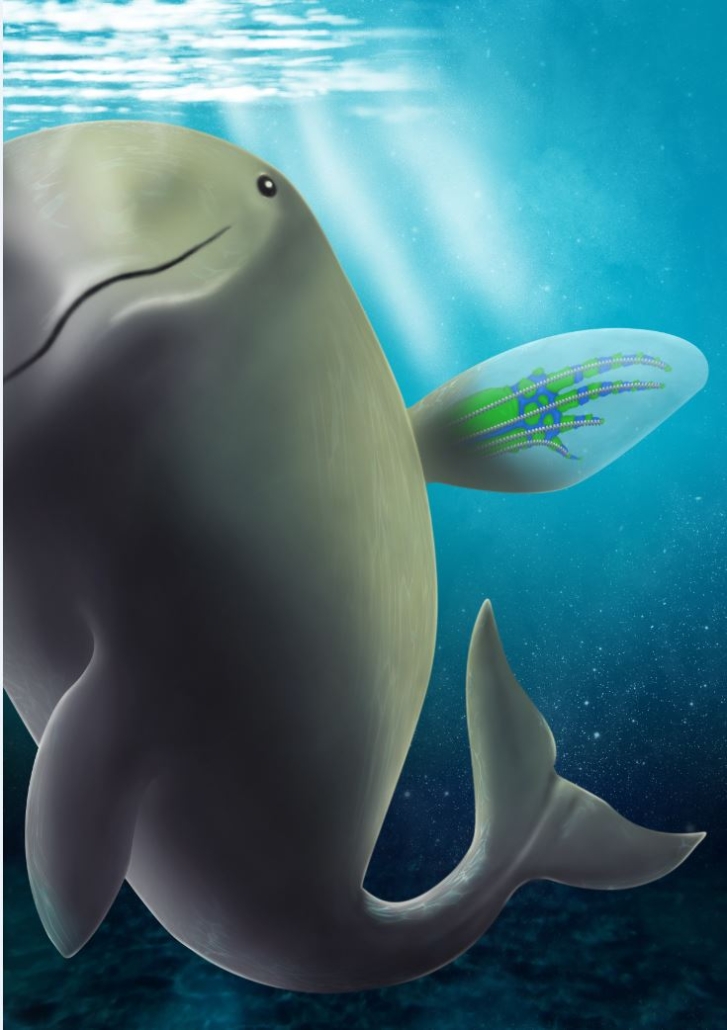

Scalable 3D-Printed Phantoms for Marine Mammal Veterinary Training
Scalable 3D-Printed Phantoms for Marine Mammal Veterinary Training
As toxic algae blooms continue to drive mass sea lion beachings along the Southern California coast, timely veterinary intervention has become increasingly urgent — yet training opportunities on live animals remain limited.
Dr. Kim’s lab, in collaboration with the U.S. Navy Marine Mammal Program, developed a synthetic California sea lion pelvic region that replicates the bone structure, soft tissue, and blood flow of its biological counterpart. Built from DICOM scan data and rendered through 3D conversion software, these models give veterinarians a lifelike structure to train with, simulating the tactile feedback of an actual procedure without relying on cadavers.
The research reflects the broader potential of soft robotics in medical and veterinary contexts, with future work targeting biocompatible implant applications for both animal and human medicine. This research was published in Scientific Reports (Nature Portfolio) in January 2025.
